Every software product I've used at work has the same shape. A row of tabs at the bottom. A search box at the top. Filters. Settings. The product's job is to hold the information; my job is to go and find it.
For a nurse, a nursing assistant or a scheduler, that shape has a cost. They open a work app between other things: walking into a building, on a break, at the end of a twelve-hour night. They come with one question, and the menu stands between them and the answer.
So we asked a different question while rebuilding ShiftNex AI: what if the app moved to you?
What we changed
1. You ask, and the app goes there.
Type or say "Lacamas day shifts" and you don't get a paragraph. You get Lacamas Creek's page, filtered to day shifts, with the pay, the times and the people you know there. The conversation stays open so you can keep going, and one tap takes you back to where you started.
2. Touch, typing and talking are one experience.
The microphone works like dictation: your words land in the same box you'd type in, and they're sent when you stop. There's one voice setting, a mute switch. Muted, you read the answer. Unmuted, it answers out loud and keeps listening, so you can move through the whole app without your hands.
3. The menu shows up only when you need it.
When you're still, the tabs are there with their names. When you scroll, they step aside and become one small "Ask" button. Most of the time you know what you want; the menu is for the moments you don't.
4. Signs, not sentences.
Walk into an airport anywhere in the world and you can find baggage, security or gate 24A without reading a word of the local language. The signs do the work, and nobody translates them. Software went the other way: because a screen could hold a description, we wrote more of them, and every task got longer.
So every recurring thing in ShiftNex gets one sign, and that sign means the same thing everywhere: in the app, in a chat answer, in a notification, on the lock screen. The parking sign always means parking. Next to it, a few words carry the specifics, like Lot B → Building B, and then the one thing you can do. You learn a sign once. After that, you're not reading the app; you're recognising it.
5. One thing at a time.
Every screen holds one decision. It shows what you need to decide, only the facts that change that decision, and nothing else. When you've decided, the next screen is the most useful next thing.
Finish a shift and the supervisor signs off. You rate the building with one tap. If that building has more open shifts that fit you, they're next. If it doesn't, you see the people you just worked alongside, and you can connect with them. Every shift leaves you a little better connected than before.
Why it matters beyond convenience
Clinicians often work with their hands full or gloved. Some live with a disability that makes a touchscreen hard; some can't speak. When an app runs on taps, those people are an edge case. When it runs on intent, any input can drive it: a finger, a voice, and as the tools mature, a switch, an eye-tracker or a brain-computer interface.
That's the real decision underneath the design. We're not building a chat feature. We're building an app that understands what someone needs and gets out of the way.
Where this is going
The next step is a home screen that changes with the moment. The night before a shift, it's your shift. When you arrive, it's clock-in. When you finish, your supervisor gets a one-tap sign-off, and your pay status follows. The same card will show up wherever you allow it, starting with your lock screen.
We'll build it the way we build everything now. We prototype each piece and look at it before any code is written. Then we ship it in small pieces that real clinicians and real facility teams use and push back on before we call any of it done.
The principle
I believe AI's only job in frontline work is to remove the busywork standing between a professional and their judgment. Finding the right screen is busywork. Reading a paragraph to learn where to park is busywork. Re-entering the same information is busywork. Hunting through a menu at 6:40 in the morning is busywork.
The judgment (whether to take a shift, how to care for a resident, who to trust on a hard night) belongs to the person. Everything else, the software should carry.
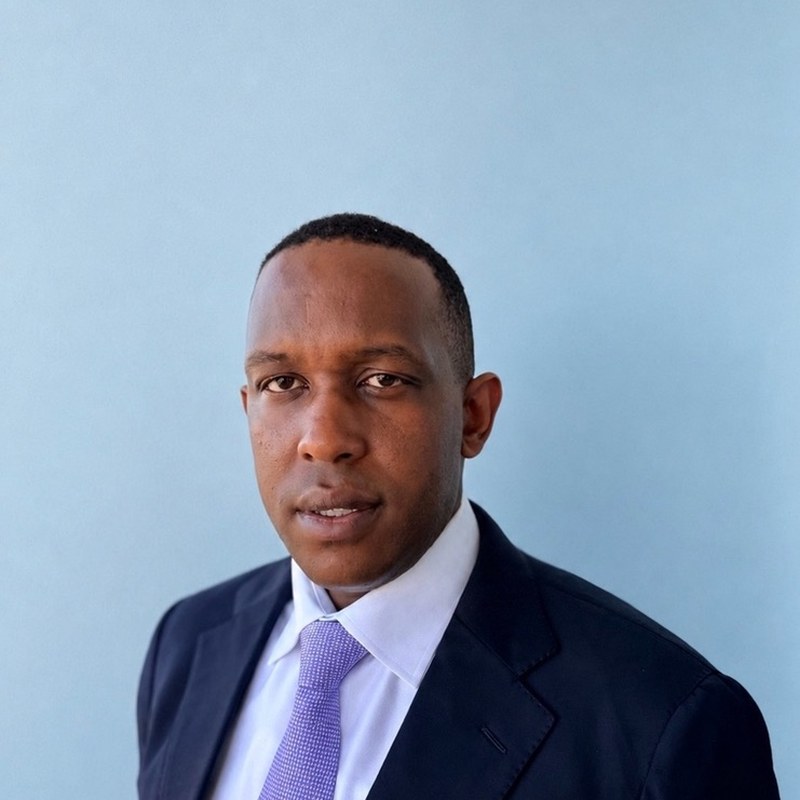
Founder & CEO of ShiftNex AI, an AI-native platform for healthcare workforce coordination. Writes about building, quality, and the discipline of running a company at the edge of what AI makes possible. Tacoma, WA — born Nairobi, Kenya.