A few months ago, the Director of Nursing at one of our facilities called me on a Saturday night. She had four no-shows on a single shift, eight hours to the morning census, and a charge nurse who had been flagging her staffing model as broken for six weeks. Nobody at the management layer above her had been listening.
That call wasn't really about the four nurses. It was about the fact that, by the time the facility was calling me on a weekend, every system they had — the agency relationships, the float pool, the per-diem list, the scheduler in the corner with sixteen tabs open — had failed her. The chaos had won.
We filled the shift. That's not the point of the story. The point is that the chaos she was drowning in is the chaos that AI is actually for, and almost nobody building AI today understands that.
This essay is about why, and about what I think the next category of workforce software is going to be called.
I should be precise about who I'm writing to. This isn't for AI researchers. They have their own discourse, and they're not waiting for an operator to weigh in on transformer architectures. This is for the people building AI products: founders, product leads, investors. Most of you have never managed humans at scale, and most of you are pointed at the wrong problem.
Here's the most common pattern I see in AI workforce products right now. A founder identifies a coordination task inside their own company that an LLM can do, builds a tool that does it, and tries to sell that tool to operators in a regulated industry. The pitch is internal productivity. Save your team time. Reduce your back-office headcount. Automate your scheduling.
I understand the appeal. Internal productivity is the easiest thing to demo. AI does help us internally — at ShiftNex, our small team supports more clients with less friction than was possible a year ago, and that matters. But the internal productivity story is the small story. The big story is what happens when you stop pointing AI at your own org chart and start pointing it at your customer's chaos.
That's the move I want to walk through, because it's the one that's going to define the next decade of workforce software — and because I think it's about to get a name.
What the customer's chaos actually looks like
When the Director of Nursing called me that night, she wasn't dealing with one problem. She was dealing with twelve, layered on top of each other.
A census that had spiked twenty percent in three days. An acuity mix heavier than her staffing model assumed. Three agencies holding her hostage on different rates for different shifts. A compliance officer on vacation, with two state survey deadlines she couldn't push. A clinician pool where the same fifteen names kept showing up because the rest had quietly stopped responding to her calls. An EMR transition eating an hour off every nurse's shift. A 2:1 ratio of coordination work to bedside care for her best charge nurse, who she was three months from losing.
None of those are AI problems in isolation. Together, they are the only problem she has. They're what every facility leader I've ever worked with is actually managing — a constant, multidimensional fire where the inputs change every twelve hours and the regulatory penalties for getting it wrong are measured in millions.
This is the texture of the work. And this is the texture that almost every AI workforce product I've seen demo'd in the last eighteen months ignores completely.
Pointing AI at the right problem
Here is what I think the operators who win in this category are going to do — and what we are doing at ShiftNex, because we lived inside this problem at Actriv for years before AI made it solvable:
What that looks like, concretely, in production today:
Census and acuity get read in real time, not in retrospect. The platform consumes the facility's data the moment it changes and adjusts staffing recommendations before the shortage shows up at 6 AM. The facility doesn't have to call us. The system already knows.
The contingent pool becomes permanent and direct. Clinicians and facilities connect without an agency in the middle taking a heavy cut and creating friction at every step. The system matches based on what each side actually wants — preferred unit, scheduling rhythm, EMR familiarity, financial goals — not just what fits a job description.
Compliance moves from reactive to predictive. Regulatory regimes change weekly. No human compliance officer can keep up across multiple states. The system tracks every change, surfaces what's relevant, and prescribes the action — so citations stop being something you fight and start being something you prevent.
Recruiting collapses from days to seconds. A clinician sends a connection request. The system verifies, credentials, and matches against open shifts in real time. The two sides start working together the same day. The fourteen-day onboarding window — the thing every staffing operator quietly accepts as a cost of doing business — disappears.
Accountability becomes data-driven instead of relationship-driven. No-show frequency, late arrivals, break adherence, overtime patterns, shift completion rates — all of it accessible from a phone, all of it queryable in plain English. Real-time location tracking confirms the clinician is where the shift is. Real-time behavior analytics keep the data flowing. The operator doesn't have to remember which clinician to trust. The data remembers for them.
Pay clears the moment the shift ends. No two-week lag, no agency invoicing cycle, no clinician anxiety about when the money lands. Real-time distribution against a verified, completed shift. This is what the gig economy revolution was supposed to feel like for clinicians, and never did.
The clinician's record becomes immutable. Every completed shift updates the profile. Care hours are tracked at the unit level — not as self-reported resume claims, but as a permanently linked record of where the clinician actually worked, in what setting, for how long, with what outcomes. The traditional resume — worked here from this date to that date — becomes obsolete the moment the platform exists. A clinician's record is no longer a list of claims they make about themselves. It's a verified history of work they actually did.
Communities form on their own. Clinicians find each other. The system recommends the right ones based on shared schedules, shared specialties, shared career trajectories. The staffing platform stops being a transaction layer and starts being an actual professional network — which is what clinicians have wanted from these companies for thirty years and never gotten.
Clinicians' financial goals become tractable. A CNA tells the system she's trying to clear a specific monthly target while keeping her Wednesdays open for school. The platform builds her schedule against that goal, surfaces the shifts that fit, and tells her when she's tracking ahead or behind.
Outcomes get tracked all the way through. We can see whether the facilities using our platform are showing measurable differences in patient outcomes — and the system surfaces what's actually moving the needle versus what isn't. The product doesn't just promise better care. It shows it.
That list isn't a roadmap. It's what's already running. And the reason it works is that none of it is pointed at our own internal productivity. It's all pointed at the chaos that the Director of Nursing was drowning in when she called me on a Saturday night.
Outcome as a service
Here is the thesis I think the next decade of workforce software is going to organize around:
I want to be careful with this claim, because category names get thrown around loosely. Let me explain what I actually mean.
For the last twenty years, the dominant model in B2B software has been: build a tool, charge a subscription, the customer figures out how to extract value from it. The vendor's accountability ends at uptime and feature shipping. Whether the customer's outcomes actually improve is the customer's problem.
This model worked when software was hard to build. It is no longer hard to build. Anyone with a credit card and an idea can ship software now. I built a national healthcare platform on Lovable in twelve months without an engineering team. The barrier to entry on the software side of B2B has collapsed.
What hasn't collapsed — what's actually gotten harder — is delivering measurable outcomes inside complex regulated industries. The Director of Nursing doesn't need another piece of software. She has plenty. She needs her unit-level patient outcomes to improve, her budget to hold, her clinician churn to drop, and her compliance citations to stop. Those are the only things she actually buys.
The companies that win the next decade are going to sell outcomes against named SLAs, not software against feature lists. The pricing will reflect that. The accountability will reflect that. The product will reflect that.
What does that look like operationally? It looks like this:
You're the CFO of a multi-facility skilled nursing operator. It's the third week of the month. You open the system. The first thing it tells you is that you're tracking over budget. Not in a dashboard you have to interpret. In a sentence, in plain English: "You're projecting eleven percent over the staffing budget this month. The driver is overtime in two units at one facility, where the regular RN pool has been short for nine days. Here's what I can do."
The system has already drafted three options. Each option has a projected dollar impact, a projected effect on clinician burnout risk based on the OT load it would shift, and a projected impact on next month's churn rate. You pick the option you want. The system executes — surfaces eligible clinicians from the direct pool, prioritizes the ones who match the shift profile and are tracking under their own preferred OT thresholds, sends offers, fills the gaps.
A month later, you open the system again. "Last month: budget came in at three percent over instead of eleven. Patient outcomes held flat. Clinician churn ticked down half a point. Next month's projection: on budget, assuming current census."
That is not a dashboard. That is not a chatbot. That is a digital colleague — a fractional COO that runs in the background, in real time, against named outcomes the operator actually buys. And the operator's question is no longer "is the software working?" It's "did my outcomes improve?" Which is the only question that ever mattered.
What changes when you take this seriously
Three things, for the founders and investors reading this.
Stop selling software. Start selling outcomes. The internal productivity pitch is the wrong pitch. Operators in regulated industries don't have a productivity problem. They have a chaos problem and an accountability problem. Sell them a tool, and they'll demo it, send it to procurement, and let it die there. Sell them measurable improvement against the four or five outcomes they actually answer to — and price the product against those outcomes — and they will buy in the first meeting. This pricing model is going to feel uncomfortable for vendors used to charging seat-based subscriptions. It is the right pricing model.
The product has to earn the bedside. Every dollar and every minute the system saves an operator should compound toward the bedside — toward the nurse who has more time with her patient, toward the budget that goes to better care instead of better margins, toward the clinician who can finally hit her financial goals without burning out. The product that doesn't earn its way to the bedside is not a healthcare product. It's an extraction product wearing healthcare clothing. Operators can tell the difference within ninety days.
The team becomes a force multiplier, not a cost center. The internal team at ShiftNex is small. It will stay small. But each person on it now supports more clients, delivers a better client experience, and creates better clinician engagement than was possible without AI in the loop. That is the internal productivity story — but it's a downstream effect of pointing AI at the customer's chaos, not the goal.
The bedside is where it matters
I want every AI founder reading this to internalize one thing: the operating layer where the work actually happens is where the next category-defining workforce companies are going to be built. Not in the labs. Not in the productivity-tool startups. In the regulated industries where humans coordinate other humans to deliver care, deliver freight, deliver patients, deliver justice.
The companies that win there will be the ones that understood AI was never about making us faster. It was about absorbing the chaos so the humans on the other end of the platform — the nurses, the doctors, the caregivers — could finally do what they came to this work to do.
That is the future I'm building toward.
That is where the bedside lives.
That is where it matters.
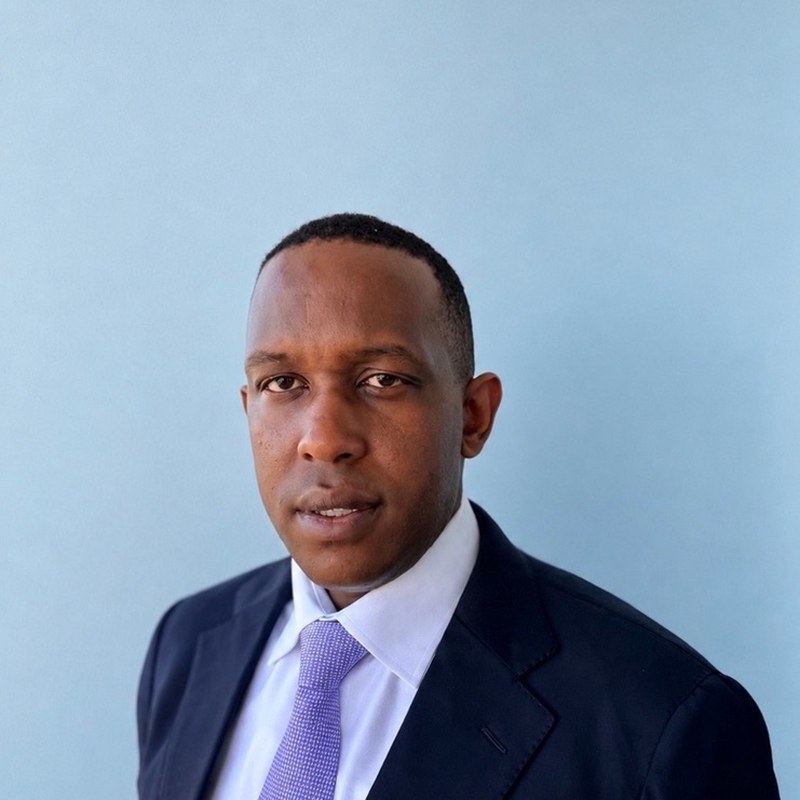

Founder of Actriv Healthcare and ShiftNex AI. Lives in Tacoma, Washington; born in Nairobi, Kenya. Named inventor on US patents 11,947,875 and 12,327,067, with additional applications pending.