By the time we sat down to build it, the idea had been in my head for the better part of a decade. The shape of the platform. The way it would feel to use. The exact place in the workflow where every existing healthcare staffing tool was failing the people I'd spent ten years working with. None of that was the hard part. The hard part was that I had never had the right tools to build it, and I had never had a team small enough to do it without losing my mind.
For ten years I carried a finished idea I couldn't externalize. Every quarter I'd watch another scheduler burn out, another DON call me at 11pm because the agency had failed her again, another piece of the chaos that no existing software was even pretending to solve. And every quarter I'd run the math on what it would cost to build the right tool and put the math back in the drawer. Engineers I couldn't afford. Timelines I couldn't justify. Distortions of the original idea by the time anything would have shipped. The carrying cost of holding a solution you can't build is its own kind of weight.
April 2025. Three of us in a room. Me, Sasha, Dmitri. Kole on the founding team, working a different layer of the problem. Lovable open in one window. A whiteboard full of workflows. A clock that nobody was watching but we all felt anyway.
We gave ourselves five days.
The decision to start
Most of the decisions about ShiftNex had already been made by the time we started building. That sounds like a paradox until you've lived inside an industry long enough. By the time we opened Lovable, I had run Actriv for almost a decade. I'd filed two patents. I'd watched our team work miracles inside scheduling tools that hadn't been redesigned since the early 2000s. I had a reasonably complete picture in my head of what good would look like.
What I didn't have, until April 2025, was the ability to build it without engineers.
That's the thing nobody tells you about being an operator with a vision. The vision isn't the bottleneck. The bottleneck is the cost of getting from "I know exactly what to build" to "the first version exists." For most of my career, that gap was filled with engineers I couldn't afford, timelines I couldn't justify, and a thousand small distortions of the original idea by the time it shipped.
Lovable closed that gap.
The first day
The first day was mostly destruction.
We took everything I thought we needed to build and threw most of it away. The mistake I was about to make — the same mistake every operator-turned-founder makes — was to build the version of the platform that fixed every grievance I had with the existing tools. That would have been a piece of software with three hundred features, all of them defensible, all of them important to someone, none of them shippable in five days.
What we built instead was the smallest possible version of the platform that solved one problem completely. A facility could post a shift. A clinician could see it, accept it, and get matched. A confirmation existed somewhere both sides could see. That was it. We left every other feature for the next sprint, the next month, the next quarter.
The hardest part wasn't building. The hardest part was deciding what not to build.
The middle days
By the second day we had a working prototype that didn't look like anything special. By the third day it looked like something a person could actually use. By the fourth day it looked like something a person could trust.
That progression — useful, usable, trustworthy — happened in roughly that order, and roughly on that timeline, and it's the thing I would tell any operator-founder to plan for. You're not building a product in five days. You're crossing three thresholds. Each one matters, and you can't skip one. A product that's useful but not usable gets demoed and abandoned. A product that's usable but not trustworthy gets a pilot and never converts. The trust threshold is the one that takes the most time, and it's the one most founders underestimate.
We crossed all three by Friday. Just barely.
The fifth day
The fifth day was about the part of the work that nobody writes essays about — the part where you're tired, the part where the small bugs that didn't matter on day one have compounded into something that does, the part where you have to make calls about what's good enough and what isn't, knowing that the wrong call in either direction has consequences.
Sasha was running product judgment. Dmitri was running the technical execution. I was making the calls about what shipped and what waited. Kole was carrying the AI systems work that would become some of the platform's most important infrastructure in the months that followed.
By Friday night the platform was live. A real facility. A real clinician. A real shift, posted, accepted, confirmed.
That was it. That was the moment.
What it actually meant
Looking back, the five-day sprint wasn't really about the five days. It was about the ten years before them.
Everything we built that week was built fast because the actual hard problems had already been solved — slowly, painfully, expensively, over a decade of running a staffing company. Every workflow we coded, every match algorithm we tuned, every edge case we handled was the result of ten thousand hours of staring at the problem from inside the industry. The five days were just the moment when AI tooling caught up to the operating context I'd been carrying around for years.
That's the lesson I keep coming back to, and it's the one I think most AI founders are getting wrong. The sprint isn't the achievement. The decade is the achievement. The sprint is just the moment when the decade becomes a product.
Five days. Four nights. Three people. One platform.
And ten years of operating context that made any of it possible.
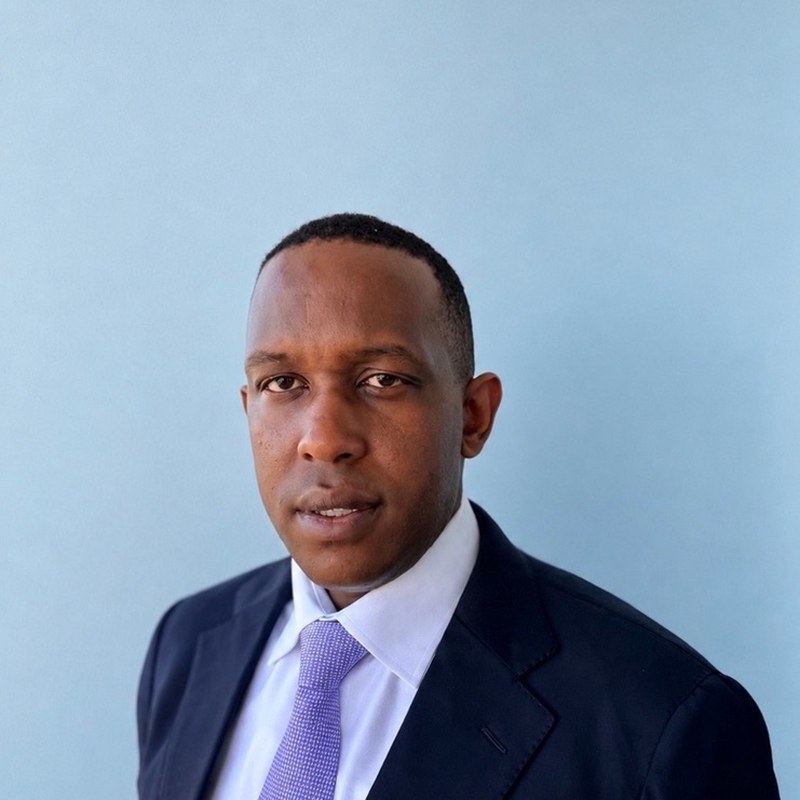

Founder of Actriv Healthcare and ShiftNex AI. Lives in Tacoma, Washington; born in Nairobi, Kenya. Named inventor on US patents 11,947,875 and 12,327,067, with additional applications pending.